Skillet vs. Oven: Your Guide to Perfect Homemade Pita Bread
There's a special kind of satisfaction that comes with creating something delicious from scratch, and homemade pita bread is no exception. Forget the dry, bland, store-bought versions; an easy homemade pita bread recipe promises a world of soft, fluffy, and aromatic delight that elevates any meal. But once you've mixed your simple dough and let it rise to perfection, a crucial decision awaits: to cook it in a skillet or bake it in the oven? Both methods yield fantastic results, but understanding their nuances can help you achieve exactly the kind of pita you're craving. Let's dive into the journey of crafting the perfect pita, from essential ingredients to the ultimate cooking technique.The Foundation: Key Ingredients for Fluffy Pita
Before we get to the exciting part of watching your pita puff, it's vital to understand the role of each ingredient in our easy homemade pita bread: soft, fluffy, & better than store-bought recipe. The beauty of this recipe lies in its simplicity, requiring just a handful of pantry staples.- Flour: The Building Block
While an easy homemade pita bread recipe is adaptable, your choice of flour can subtly influence the final texture. Bread flour, with its higher protein content, lends a chewier, more substantial bite, which many find ideal for pita. However, don't hesitate to use all-purpose flour for a lighter texture or even whole wheat flour for a nuttier flavor and added fiber. Experiment to find your personal preference!
- Yeast: The Life of the Dough
This recipe relies on instant yeast, a baker's best friend due to its no-fuss nature – it can be mixed directly with dry ingredients. If you only have active dry yeast, simply activate it first in warm water (around 105-115°F or 40-46°C) with a pinch of sugar for about 5-10 minutes until frothy. This bubbling indicates your yeast is alive and ready to work its magic.
- Sugar: A Sweet Boost
Beyond adding a hint of sweetness, sugar plays a critical role in activating the yeast, providing it with fuel to ferment and produce carbon dioxide, which gives our pita its airy texture. It also aids in achieving that lovely golden-brown crust.
- Salt: The Flavor Enhancer
Salt isn't just for taste; it also strengthens the gluten structure in the dough and helps regulate yeast activity, ensuring a perfectly balanced flavor and texture.
- Warm Water: The Catalyst
The correct water temperature is crucial for yeast activation. Too cold, and the yeast won't activate; too hot, and you risk killing it. Aim for lukewarm, similar to bathwater, typically between 105-115°F (40-46°C).
Mastering the Dough: Tips for Fluffy Perfection
The secret to truly soft and fluffy pita lies in gentle handling and a little patience. Thankfully, this easy homemade pita bread recipe requires no fancy equipment or strenuous kneading.- Activate Your Yeast (If Using Active Dry): As mentioned, combining warm water, sugar, and active dry yeast will create a frothy, bubbly mixture after 5-10 minutes. This visual cue is your green light to proceed, assuring you that your yeast is alive and ready to make your pita rise.
- The Gentle Mix & Rise: Once your yeast is ready (or if using instant yeast, just combine everything), mix your ingredients until a shaggy dough forms. Turn it out onto a lightly floured surface and knead for just 5-7 minutes until it's smooth and elastic. Cover your dough with a clean towel and let it rise in a warm spot for about an hour, or until it has visibly doubled in size. This slow rise develops flavor and creates the internal structure needed for those coveted air bubbles.
- Preserving Air Bubbles During Shaping: After the first rise, gently punch down the dough to release excess air. Divide it into 6-8 equal portions. Roll each portion into a smooth ball, then gently flatten it into a disk. The trick here is to use your fingers or the palm of your hand to flatten rather than a heavy rolling pin initially. This technique helps preserve the precious air bubbles that contribute to a fluffy pita.
- The Final Rest: Once flattened, let your dough disks rest for another 10-15 minutes. This allows the gluten to relax, making them easier to roll out more thinly and preventing them from snapping back. This rest is essential for achieving that perfect puff!
The Great Debate: Skillet vs. Oven for Your Pita
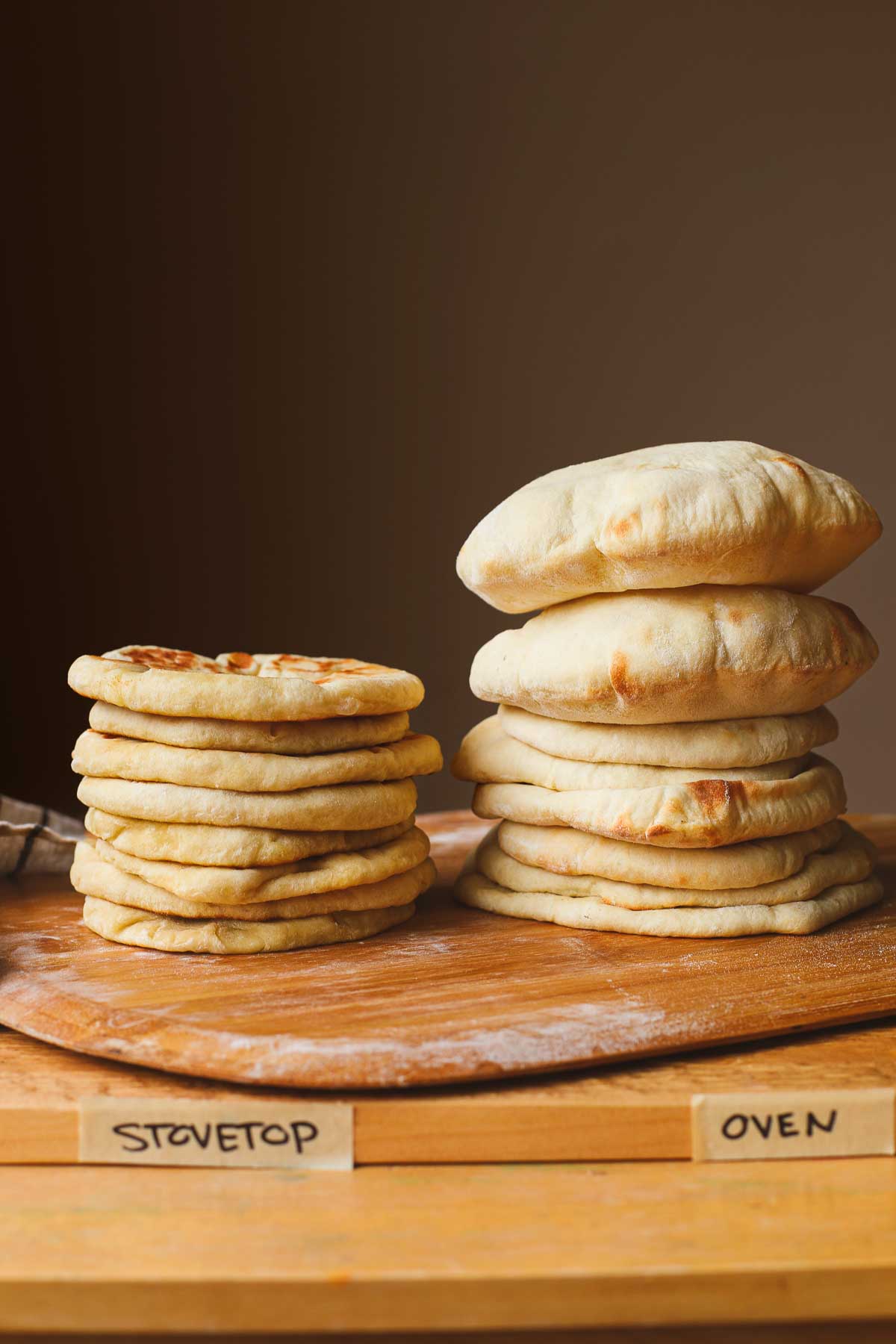
Now for the pivotal decision that influences your pita's final character: how to cook it. Both the skillet and oven methods deliver delicious results, but with distinct textures and applications.The Skillet Method: For Soft & Fluffy Flatbread
If you crave a consistently soft, slightly chewy pita that's perfect for scooping up dips or serving alongside a meal, the stovetop skillet method is your go-to.- The Setup: Heat a heavy-bottomed skillet (cast iron works wonderfully) over medium heat. A little oil (avocado oil or olive oil works great) prevents sticking and aids in browning.
- The Process: Carefully place a prepared pita round into the hot skillet. Cook for about 1-2 minutes per side. You’ll know it’s ready to flip when you see bubbles forming on the surface and the underside has developed golden-brown spots. Flip and cook the other side until it's similarly blistered and cooked through. While it might puff slightly, the skillet method typically yields a softer, flatter pita, less prone to forming a large, distinct pocket.
- Pros:
- Achieves a soft, pliable, and slightly chewy texture.
- No need to heat up your entire kitchen.
- Great for quick batches or when you want a more "flatbread" style pita for dipping.
- Cons:
- Cooks one pita at a time, which can be slower for larger batches.
- Less likely to develop a pronounced internal pocket.
The Oven Method: For Puffed Pita Pockets
For those iconic pita pockets, ideal for stuffing with your favorite fillings for sandwiches or gyros, the oven is your best friend. The secret lies in extreme heat.- The Setup: Preheat your oven to a scorching 475°F (246°C). A critical tip for achieving maximum puff is to preheat a baking steel or heavy baking sheet inside the oven as it comes to temperature. This creates an intensely hot surface that instantly shocks the dough, causing rapid steam production and that magical pocket formation.
- The Process: Once your oven and baking surface are screaming hot, lightly flour squares of parchment paper and place your pita rounds on them. Carefully transfer the pita (on the parchment) directly onto the preheated baking steel or sheet. Close the oven door immediately to trap the heat. Bake for just 2-4 minutes. You’ll witness the pita ballooning up dramatically, creating that perfect pocket. It will be lightly golden brown around the edges.
- Pros:
- Consistently produces that classic internal pocket, perfect for stuffing.
- Can cook multiple pita rounds at once, depending on your oven and baking surface size.
- Offers a slightly crispier exterior with a soft interior.
- Cons:
- Heats up your kitchen significantly.
- Requires a very hot oven and ideally a baking steel or preheated sheet for best results.
